A cardiovascular risk signal visible on mammography
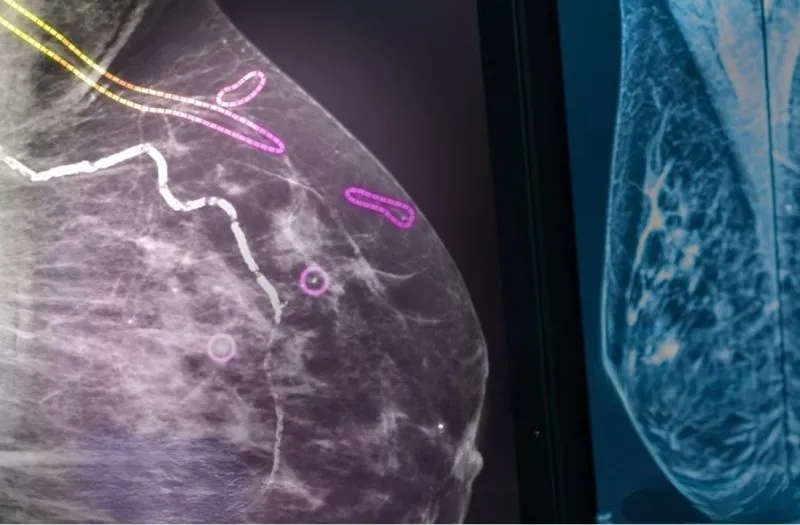
Breast arterial calcification, or BAC, is calcium within the arteries of the breast that can be visible on a mammogram. BAC is unrelated to breast cancer and is not a diagnosis of heart disease, but its presence is independently associated with increased cardiovascular risk.
What is BAC?
BAC is calcification within the arteries of the breast. It typically appears as linear or “tram-track” calcification along the arterial wall and is distinct from the breast calcifications evaluated for malignancy.
How SimonMed identifies BAC
A standard screening mammogram is interpreted primarily for signs of breast cancer. BAC may
be visible and, when identified, is documented by the interpreting radiologist.
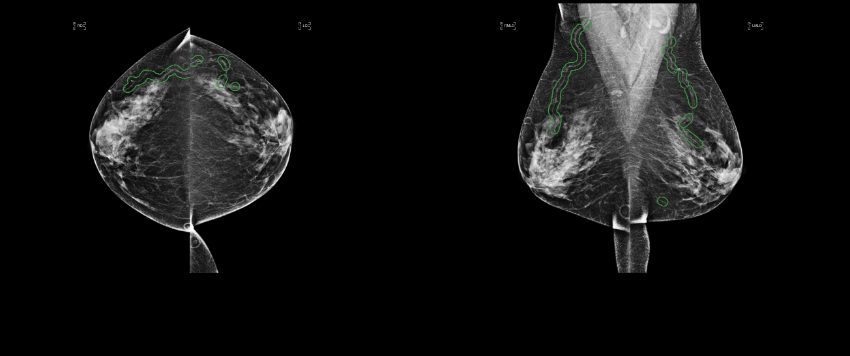
Mammogram+ Heart adds dedicated AI to detect BAC, providing a more systematic
assessment for this additional heart-health insight. Findings are reviewed by the radiologist,
included in the radiology report, and shared with patients through a personalized report in the
SimonMed Digital Health Platform.
AI-detected BAC highlighted in green
Why does BAC matter?
56% higher adjusted risk²
For the composite outcome of heart attack, heart failure, stroke or all-cause death
BAC is associated with a meaningful increase in cardiovascular risk, even after accounting for established risk factors.
In a 2024 study of more than 18,000 women, the presence of BAC was associated with a 56% higher adjusted hazard of a composite outcome comprising heart attack, heart failure, stroke or all-cause death, and a 49% higher adjusted hazard of all-cause mortality, compared with women without BAC. These associations remained after adjustment for established risk factors including age, blood pressure, cholesterol, diabetes, smoking and prior cardiovascular disease.
A 2026 review summarized evidence linking BAC with adverse cardiovascular outcomes, including heart attack, stroke, heart failure and death, and highlighted its potential role in cardiovascular risk assessment in women.
BAC can provide an additional cardiovascular risk signal to consider as part of a patient’s overall cardiovascular risk assessment.
BAC is a risk signal — not a diagnosis
BAC is biologically distinct from coronary artery calcification. Its presence does not establish coronary plaque, coronary obstruction or a diagnosis of cardiovascular disease, and standardized approaches to BAC-based risk assessment and follow-up continue to evolve.
What should I do if BAC is identified?
✓ Discuss the finding with the patient
Explain that BAC is associated with increased cardiovascular risk but is not a diagnosis of heart disease.
✓ Assess overall cardiovascular risk
Review blood pressure, lipids, diabetes, smoking, family history, lifestyle and other relevant risk factors.
✓ Consider preventive counseling and risk-factor management
Use the patient’s overall cardiovascular risk, clinical history and clinical judgment to guide appropriate preventive care.
✓ Consider cardiovascular imaging when clinically appropriate
Depending on the patient’s overall risk and clinical context, options may include Coronary Calcium Score CT, Coronary CTA or other clinically appropriate cardiovascular imaging.
FAQs
No. BAC is associated with increased cardiovascular risk, but its presence does not establish coronary plaque, coronary obstruction or a diagnosis of coronary artery disease.
No. BAC and coronary artery calcium represent calcification in different vascular beds and should not be considered interchangeable.
BAC does not automatically require additional cardiac imaging. Depending on the patient’s overall cardiovascular risk and clinical context, options may include Coronary Calcium Score CT, Coronary CTA or other clinically appropriate cardiovascular imaging.
A standard screening mammogram is interpreted primarily for signs of breast cancer. BAC may be visible and may be noted by the interpreting radiologist when identified. Mammogram+ Heart adds dedicated AI analysis specifically designed to detect BAC and provides the patient with a personalized Heart Health Report through the SimonMed Digital Health Platform.
BAC may provide additional cardiovascular risk information and can prompt review of established risk factors, preventive care needs and appropriate next steps based on the patient’s overall clinical picture.
References
1. Ndirangu B, Gichoya J, Dapamede T, et al. Review of breast arterial calcifications for cardiovascular disease risk prediction. npj Cardiovasc Health. 2026;3:33. doi:10.1038/s44325-026-00135-4.
2. Allen TS, Bui QM, Petersen GM, et al. Automated Breast Arterial Calcification Score Is Associated With Cardiovascular Outcomes and Mortality. JACC Adv. 2024;3(11):101283. doi:10.1016/j.jacadv.2024.101283.