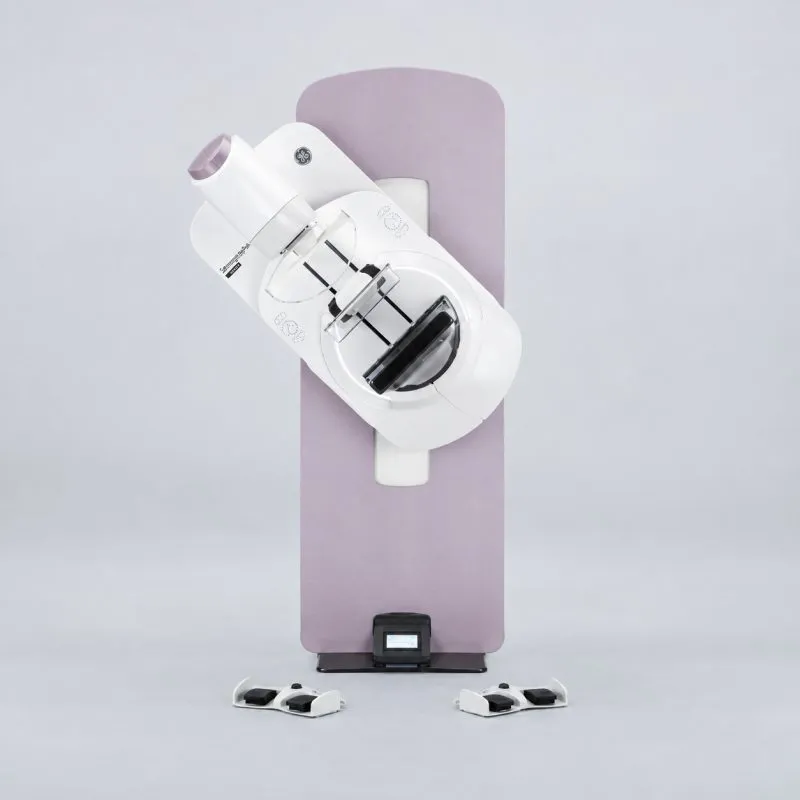
Mammography is the foundation of breast cancer screening—but it may not always be the whole picture.
Some women have dense breast tissue or other risk factors that can make additional imaging helpful. Depending on your breast density, calculated breast cancer risk, family history and other factors, your healthcare provider may recommend adding breast ultrasound, breast MRI, or both to your routine mammogram.
That doesn’t necessarily mean something is wrong. It means breast cancer screening isn’t one-size-fits-all.
Understanding your personal risk can help you and your healthcare provider build a screening plan designed for you.
What is supplemental breast screening?
Supplemental breast screening is imaging performed in addition to routine mammography when breast density, breast cancer risk or other factors suggest that more imaging may be helpful.
Mammography remains the foundation of screening. Depending on your individual risk, your screening plan may also include whole-breast ultrasound, breast MRI or both.
- Mammography
- Mammography + whole-breast ultrasound
- Mammography + breast MRI
- Mammography + ultrasound + MRI
The right combination depends on more than any single risk factor.
Your mammogram may reveal more than breast health
A mammogram is designed to screen for breast cancer, but it may also reveal information about your heart health.
One example is breast arterial calcification (BAC)—calcium deposits in the arteries of the breast that may be visible on a mammogram. BAC is different from breast calcifications associated with breast cancer and may provide additional insight into cardiovascular risk.
Why do dense breasts matter?
Dense breast tissue is common, and it can also make some cancers more difficult to see on a mammogram because dense tissue can obscure abnormalities.
Because dense tissue can obscure abnormalities on mammography, supplemental imaging such as whole-breast ultrasound may help reveal cancers that might otherwise remain hidden.
Breast density can also factor into your overall breast cancer risk.
If your mammogram report says you have dense breasts, that doesn’t automatically tell you which screening test you need next. Instead, it gives you another piece of information to discuss with your healthcare provider.
Want to understand breast density first? Be sure to read our guide, What Does It Mean to Have Dense Breasts?
When might whole-breast ultrasound be part of your screening plan?
Whole-breast ultrasound uses sound waves to create images of breast tissue. It does not use ionizing radiation; it can provide another way to examine tissue that may be difficult to evaluate with mammography alone.
Supplemental whole-breast ultrasound may be considered for women with dense breasts or a calculated lifetime breast cancer risk of approximately 15–20%, depending on individual risk factors and clinical recommendations.
At SimonMed, FDA-approved AI adds another layer of insight to breast ultrasound.
When might breast MRI be part of your screening plan?
Breast MRI provides highly sensitive imaging that can identify some cancers not seen on mammography. Like ultrasound, it complements rather than replaces routine mammography for appropriately selected patients.
Annual screening breast MRI is generally recommended for women with a calculated lifetime breast cancer risk of 20% or greater. But that’s not the only reason MRI may be considered.
Depending on your individual situation, screening breast MRI may also be appropriate if you:
- Have dense breasts and may benefit from additional screening based on your overall risk and clinical recommendations.
- Have certain inherited genetic variants or a qualifying family history.
- Received radiation therapy to the chest at a young age.
- Have a personal history of breast cancer and certain other risk factors.
Breast MRI also does not use ionizing radiation. For women with dense breasts and elevated risk, its high sensitivity can provide another layer of information about breast health.
Your screening plan could include both ultrasound and MRI
It’s tempting to think about it as a simple formula:
Dense breasts = ultrasound.
High risk = MRI.
But breast screening is more personalized than that.
Ultrasound and MRI provide different types of information, and they aren’t necessarily substitutes for one another.
A woman with dense breasts, for example, might receive supplemental ultrasound and also meet criteria for breast MRI because of her calculated lifetime risk, family history, genetics or personal history.
In some cases, a screening plan may pair mammography with ultrasound and follow up with an MRI 6 months later, alternating every 6 months. The goal is to choose imaging based on your complete risk profile, not one number or characteristic alone.
How does your provider determine what screening you need?
There’s no single test or question that determines the right screening plan for everyone.
Your healthcare provider may consider your:
- Breast density
- Calculated lifetime breast cancer risk
- Family history of breast or ovarian cancer
- Genetic risk factors
- Personal history of breast cancer or certain high-risk breast lesions
- History of radiation therapy to the chest at a young age
Additional screening may identify noncancerous findings that lead to follow-up imaging or biopsy. That’s another reason decisions about additional screening should be based on individualized risk assessment and shared decision-making with your healthcare provider.
Know your breast cancer risk before age 40
Planning for breast cancer screening shouldn’t be based on age alone.
The American College of Radiology recommends that women undergo breast cancer risk assessment by age 25 so those at increased risk can be identified and, when appropriate, begin screening earlier.
That doesn’t mean every woman needs breast imaging at 25.
It means you shouldn’t have to wait until your first routine mammogram to discover that your family history, genetics or other factors may put you at increased risk.
Knowing your risk earlier gives you and your healthcare provider more time to decide what screening schedule makes sense for you.
What should you do if you’re unsure what screening you need?
Start by knowing your own breast health story.
Find out your breast density. Learn your family history of breast and ovarian cancer on both sides of your family. Ask whether you’ve had a formal breast cancer risk assessment. And make sure your healthcare provider knows about relevant genetic testing, previous breast cancer diagnoses or other risk factors.
Then ask a simple question:
Is mammography enough for me, or should supplemental screening be part of my plan?
That conversation can help determine whether whole-breast ultrasound, breast MRI or both may provide useful additional information.
Your screening plan should reflect your risk
The right breast screening plan looks beyond age alone.
Your breast density, health history and breast cancer risk are personal. Your screening plan can be, too.
SimonMed offers mammography, whole-breast ultrasound and breast MRI to support individualized breast cancer screening. With subspecialized breast radiologists, advanced imaging technology and coordinated access to additional breast imaging and image-guided biopsy where available, SimonMed helps patients and their healthcare providers get the information they need to determine what comes next.
If you have dense breasts, a family or personal history of breast cancer, elevated calculated risk or other risk factors, talk with your healthcare provider about whether supplemental breast screening may be appropriate for you.
FAQs
Generally, no. Ultrasound or MRI may be added to mammography based on your breast density, risk and other clinical factors.
Possibly. Whole-breast ultrasound may be recommended based on your breast density, overall risk and clinical history. Ask your healthcare provider if it’s appropriate for you.
Breast MRI is commonly recommended for women with a lifetime breast cancer risk of 20% or greater and may also be appropriate for women with dense breasts or other elevated-risk factors.
Yes. Some women may have mammography, ultrasound and MRI as part of their screening plan based on their individual risk.
No. Ultrasound uses sound waves, and MRI uses magnetic fields and radio waves. Neither uses ionizing radiation.