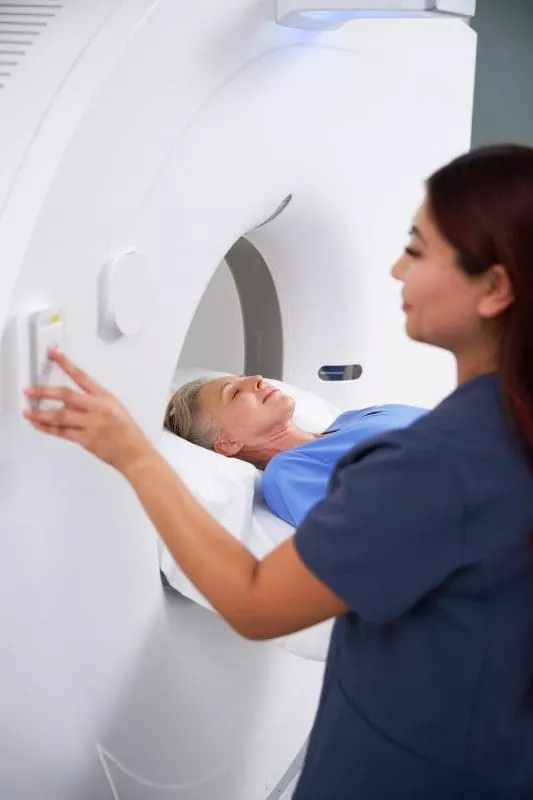
A complete picture
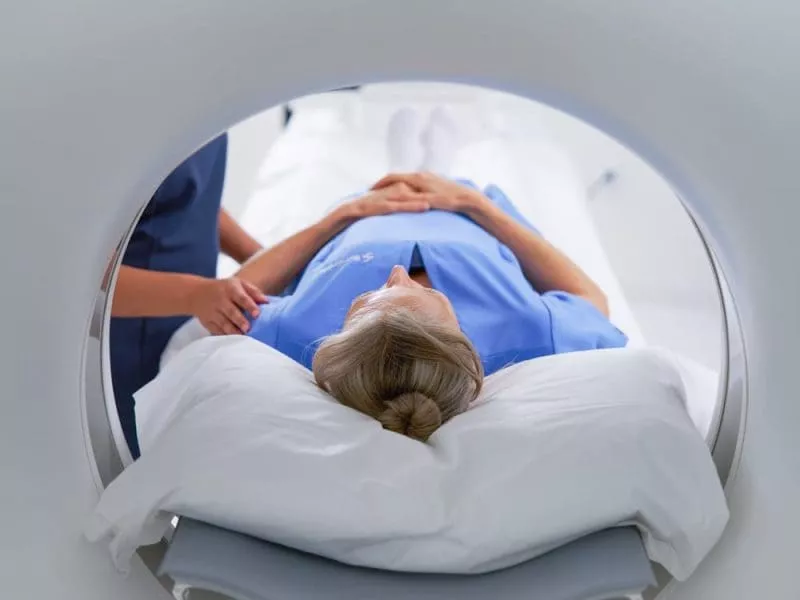
What to expect during your PET/CT
The exam combines two advanced imaging techniques in one visit to deliver a more complete view of your health.
During your PET/CT, a small amount of a radiotracer is given through an IV to highlight areas of activity within your body. You’ll then relax in a quiet, comfortable room for about 45 to 60 minutes while the tracer circulates. Once ready, you’ll be positioned on the scan table as the PET/CT captures detailed images—typically taking 20 to 30 minutes. The entire visit usually lasts about two to three hours from start to finish.
After your scan, you can return to your normal routine. Drinking plenty of water throughout the day helps flush the tracer from your system. A fellowship-trained radiologist will interpret your images and send a detailed report to your provider, who will review the results with you.
Our team will review everything with you before your scan to make sure you’re fully comfortable and confident.
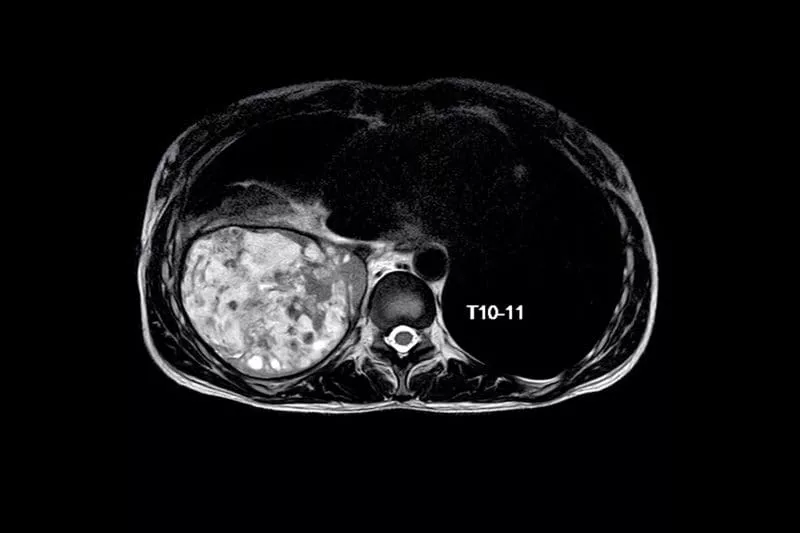
The power of seeing activity, not just anatomy
PET/CT helps detect disease earlier, personalize treatment, and improve patient outcomes across many conditions.
Up to 30%
~95%
78%

Dr. Anjaly Curley, Director of Oncologic Imaging
SimonMed
PET/CT allows us to see how disease is behaving at the cellular level, not just where it is. That insight helps tailor each patient’s care plan with greater precision and confidence.
Have questions? Get answers
Yes. Because PET/CT uses a radiotracer and is typically performed for specific diagnostic reasons, a provider order is required. Your doctor will determine if PET/CT is appropriate for your condition, and our team can help coordinate the scheduling and insurance authorization once the order is received.
It shows both how your body is functioning and where disease may be located. PET detects areas of active cellular change, while CT provides precise anatomical detail—all combined into one comprehensive image.
You’ll need to avoid eating for at least six hours before your scan, but you can drink water freely. The day before, limit sugary foods and focus on lean proteins and vegetables. Because physical activity can affect your results, avoid strenuous exercise for 24 hours before your appointment. If you take medication or have diabetes, your care team will provide specific instructions. Please tell us if you’re pregnant or breastfeeding before your visit.
Yes, but the amount is carefully controlled and kept as low as possible. The radiotracer used in PET naturally loses radioactivity quickly, and the CT portion uses low-dose technology. The benefits of early, accurate diagnosis generally far outweigh the minimal exposure.
No. Aside from a small IV injection for the tracer, the scan is painless. You’ll rest quietly before the scan and lie comfortably during imaging.
Most visits last about two to three hours, including the tracer uptake and scan time. The actual imaging portion typically takes 20 to 30 minutes.
A fellowship-trained radiologist reviews your images and sends a detailed report to your provider, who will go over the results and next steps with you.
Because PET/CT uses a radiotracer, it may not be appropriate for people who are pregnant or breastfeeding. Patients with poorly controlled diabetes or recent high-intensity exercise may also need to postpone their scan. Your care team will review your situation to ensure the exam is safe and accurate.
More ways to understand your health
SimonMed provides all the latest imaging technology under one roof—so you and your doctor can make decisions with confidence.
CT scan
Provides detailed cross-sectional images of your body’s internal structures to help detect, diagnose, and monitor a wide range of conditions.
MRI
Uses magnetic fields and radio waves to capture highly detailed images of soft tissues and organs—without radiation exposure.
DEXA bone density
Highlights areas of bone change or abnormal activity using a small amount of radiotracer, helping identify fractures, infection, or neoplasm.